

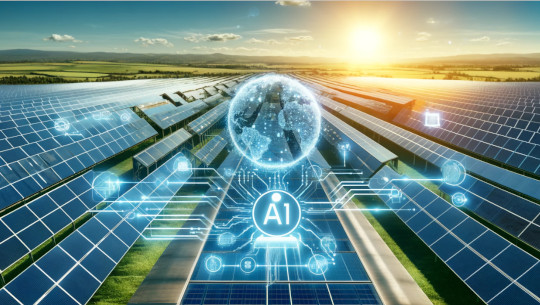
One of the most significant themes emerging across private markets today is that artificial intelligence is no longer simply a software story. It is increasingly becoming an infrastructure story. As AI systems scale, they encounter a physical constraint that investors can no longer overlook: electricity. The expansion of compute power, data centres, and machine learning infrastructure is rapidly increasing energy demand, linking the future of digital innovation directly to the capacity of power systems.
This dynamic was one of the central takeaways from the panel discussion on The Future of Energy: AI Demand, Grid Optimisation, and Beyond. What stood out was not only the expected growth in electricity demand, but also the fact that the energy system must now accommodate several structural transitions simultaneously. AI-driven data centre expansion is accelerating power consumption, electrification is advancing across transport and industry, and the grid itself must continue to meet the reliability standards required by a modern economy. In practical terms, the next phase of technological progress will depend not only on semiconductors, algorithms, and data, but also on generation capacity, transmission networks, interconnection processes, permitting systems, and distributed energy infrastructure.
From an investment perspective, this shift is particularly important because periods of infrastructure strain often produce some of the most durable investment opportunities. When an asset becomes essential to the functioning of the economy yet difficult to expand quickly, capital tends to flow toward the segments of the value chain where bottlenecks emerge. Investors who can identify where those constraints are forming may be able to capture value before markets fully recognise it.
Recent data increasingly supports this view. The International Energy Agency expects electricity demand from data centres worldwide to more than double by 2030, reaching approximately 945 terawatt-hours, with AI representing one of the principal drivers of this growth. In the United States, electricity demand is projected to increase by roughly 2 percent annually through the end of the decade, with nearly half of that increase attributed to data centre expansion. Research from the Electric Power Research Institute suggests the shift could be even more significant, estimating that data centres may account for between 9 percent and 17 percent of total U.S. electricity consumption by 2030, compared with roughly 4 to 5 percent today.
What makes this development particularly investable is that the pressure on energy systems is already visible in planning decisions and capital allocation. The Edison Electric Institute reports that U.S. electric companies are expected to invest more than $1.1 trillion between 2025 and 2029, with approximately $208 billion projected for 2025 alone. At the same time, around 91 gigawatts of new power capacity is currently under construction, with nearly 488 gigawatts planned or proposed over the next several years. These figures illustrate the scale of the infrastructure expansion required to maintain reliability while accommodating rising demand.
For investors, the opportunity is not confined to a single segment of the energy market. Instead, it spans multiple layers of the power ecosystem, including transmission and distribution upgrades, flexible generation assets, grid management software, distributed energy resources, power equipment manufacturing, and energy storage technologies. It also extends to less visible but equally important participants in the value chain—companies that help utilities manage peak demand, accelerate interconnection processes, enhance grid visibility, or balance supply and demand in real time.
What made the panel discussion particularly insightful was its emphasis on constraints rather than technological hype. In many innovation cycles, capital initially concentrates on the most visible winners. In this cycle, however, some of the most durable value may lie behind the scenes. While data centres spend heavily on computing infrastructure, electricity supply is emerging as one of the binding constraints on their growth. In this sense, the digital revolution is increasingly intersecting with the physical economy—a point at which long-duration infrastructure opportunities often begin to emerge.
This intersection also explains why the conversation around energy is shifting from the broad concept of “energy transition” toward the more practical question of capacity. Power systems must be built not for average demand but for peak summer and winter loads, while maintaining adequate reserve margins. As a result, permitting timelines, construction cycles, and equipment availability are becoming increasingly important factors. Renewable projects such as wind and solar can often be deployed more rapidly than large-scale nuclear or certain thermal alternatives, although each technology continues to play a role within the long-term energy mix. At the same time, supply constraints remain visible across key equipment categories, including gas turbines and other power infrastructure components.
Distributed energy solutions were also highlighted as an increasingly important part of the evolving grid architecture. As interconnection delays and peak-load pressures intensify, localised energy systems—such as rooftop solar, battery storage, and hybrid microgrids—are becoming valuable not only for sustainability objectives but also for reliability. Policy frameworks and interconnection processes are gradually evolving to support this shift, reflecting the growing role that distributed resources are expected to play in balancing electricity supply and demand.
For family offices, this transformation has particular relevance. Unlike larger institutions that may be constrained by benchmark allocations or scale requirements, family offices often have greater flexibility to explore opportunities across different layers of the infrastructure ecosystem. They can take a longer-term view, spend time understanding regulatory frameworks and management quality, and allocate capital to businesses that solve real operational constraints rather than simply benefiting from thematic exposure.
This flexibility may prove particularly valuable as AI-driven energy demand continues to reshape infrastructure investment. The opportunity set now extends beyond traditional utilities into areas such as grid technology, distributed energy platforms, power equipment supply chains, and specialised infrastructure operators. Family offices that approach the theme with patience and selectivity may be well positioned to identify assets where demand visibility, scarcity, and operational capability intersect.
Ultimately, the future of energy is no longer defined solely by decarbonisation or policy targets. It is increasingly defined by the physical buildout required to support the next phase of economic growth. Artificial intelligence may be the newest driver of electricity demand, but it is entering an energy system already under pressure from electrification, industrial reshoring, and ageing infrastructure. As these forces converge, power infrastructure is moving from the background of the digital economy to the centre of it—creating a long-term investment theme that family offices are beginning to examine more closely.
Aceana Group, Insights